|
|
|
|
|
Itinerary
gives you both Adventure & Relaxation:
Climb Kilimanjaro - Machame Route and
afterwards take in the history and
culture of Zanzibar whilst relaxing by
the Indian Ocean! |
|
|
|
|
This trip are
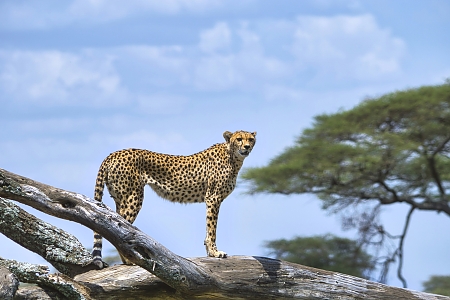
the home of large to small animals including
birds and reptiles, also there are luxury to
standard lodges, luxury to standard tented
camps and budget campsites. Inside and
outside the parks |
|
|
|
|
Visit the 'big five' areas of Tanzania
on this 4 night safari. The itinerary
starts with a Tarangire Park, and then
continues to Lake Manyara,
Serengeti and to be ends Ngorongoro
Crater. |
|
|
|
|
This great value budget
road safari takes you to Maasai Mara,
Kenya’s most famous and finest game
sanctuary. Your stay is in a lodge not
under tents unlike most budget offers.
The Mara offers wildlife in such variety
and abundance that it is difficult to
believe.... |
|
|
|
|
This tour combines Kenya’s twin
attractions- the safari and beach
experience. You begin at Aberdares where
you find icy rivers, spectacular
waterfalls and rain forests. Here
elephants, buffalos and other animals
visit you at the floodlit waterholes of
The Ark. |
|
|
|
An unforgettable holiday! - The very
best of Tanzania's wildlife parks combined with
a beach holiday in Zanzibar. Perfect for
Honeymooners. |
|
|
|
|
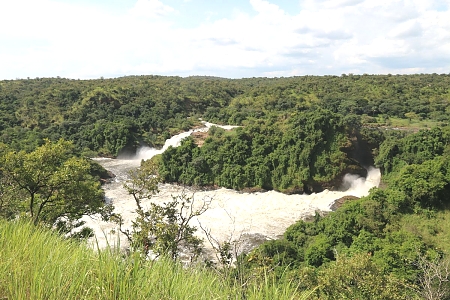
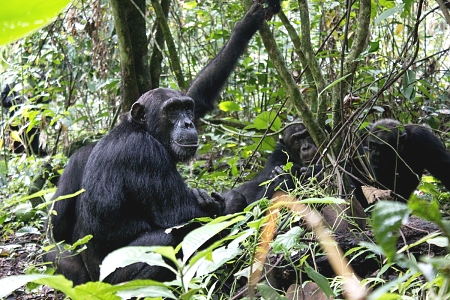
Uganda is
best know for its amazing Gorilla tracking
safaris. Additional activities include white
water rafting, birding and mountaneering
excusrions. |
|
|
|
|
A very
comprehensive one week safari of Kenya. The
safari starts from Nairobi, goes straight to
the
Lake Baringo,
then to Lake Nakuru and to be ends Masai
Mara |
|
|
|
|
This is the
perfect 14 day holiday for romantics -
combining a Tanzanian safari with time on
the beach in Zanzibar.... |
| |
|
|
General Information about Egypt
Egypt is officially known as the
Arab Republic of Egypt and is
located in north-eastern Africa
and southwestern Asia. Cairo,
the capital and largest city, is
the most modern in the Middle
East and Africa.
It is bounded on the north by
the Mediterranean Sea, on the
east by Israel and the Red Sea,
on the south by Sudan, and on
the west by Libya. The country
has a maximum length from north
to south of about 1086 km (about
675 m) and a maximum width, near
the southern border, of about
1255 km (about 780 m). It has a
total area of about 1,001,450 sq
km (about 386,662 sq m). Less
than one-tenth of the land area
of Egypt is settled or under
cultivation, this consists of
the valley and delta of the
Nile, a number of desert oases,
and land along the Suez Canal.
More than 90 percent of the
country consists of desert
areas: In the west, the
Libyan Desert, a part of the
Sahara Desert which is also
known as the Western Desert. The
Libyan Desert includes a vast
sandy expanse called the Great
Sand Sea. Located here are
several depressions with
elevations below sea level,
including the Qattara
Depression, which has an area of
about 18,000 sq km (about 7000
sq m) and reaches a depth of 133
m (436 ft) below sea level, the
lowest point in Africa. Also
found here are the oases of Siwa,
Kharga, Baharia and Dakhla.
In the east the Arabian Desert,
also called the Eastern Desert
(which borders the Red Sea and
the Gulf of Suez). Much of the
Arabian Desert occupies a
plateau that rises gradually
east from the Nile Valley to
elevations of about 600 m (about
2000 ft) in the east and is
broken along the Red Sea coast
by jagged peaks as high as about
2100 m (about 7000 ft) above sea
level.
In the extreme south, along the
border with Sudan, is the Nubian
Desert, an extensive region of
dunes and sandy plains.
The Sinai Peninsula consists of
sandy desert in the north and
rugged mountains in the south,
with summits looming more than
about 2100 m (about 7000 ft)
above the Red Sea. Mount
Catherine (Jabal Katrėnah - 2637
m/8652 ft), the highest
elevation in Egypt, is in the
Sinai Peninsula, as is Mount
Sinai (Jabal Mosa), where,
according to the Old Testament,
Moses received the Ten
Commandments.
The Nile enters Egypt from the
Sudan and flows north for about
1545 km (about 960 m) to the
Mediterranean Sea. For its
entire length, from the southern
border to Cairo, the Nile flows
through a narrow valley lined by
cliffs. Lake Nasser, the world's
largest man-made reservoir and
formed by the Aswan high dam,
extends south across the Sudan
border. The lake is about 480 km
(about 300 m) long and is about
16 km (10 m) across at its
widest point. About two-thirds
of the lake lies in Egypt.
South of a point near the town of Idfu,
the Nile Valley is rarely more
than 3 km (2 m) wide. From Idfu
to Cairo, the valley is about 23
km (about 14 m) in width, with
most of the arable portion on
the western side. In the
vicinity of Cairo the valley
merges with the delta, a
fan-shaped plain, the perimeter
of which occupies about 250 km
(about 155 m) of the
Mediterranean coastline. Silt
deposited by the Rosetta
(Rashid), Damietta (Dumyat), and
other distributaries has made
the delta the most fertile
region in the country. However,
the Aswan High Dam has reduced
the flow of the Nile, causing
the salty waters of the
Mediterranean to erode land
along the coast near the Nile.
A series of four shallow,
brackish lakes extends along the
seaward extremity of the delta.
Another larger lake, Birkat
Qarun, is situated inland in the
desert north of the town of Al
Fayoum.
Geographically and
traditionally, the Nile Valley
is divided into two regions,
Lower Egypt and Upper Egypt, the
former consisting of the delta
area and the latter comprising
the valley south of Cairo.
Although Egypt has about 2450 km
(about 1520 m) of coastline,
two-thirds of which are on the
Red Sea, indentations suitable
as harbours are confined to the
delta. The Isthmus of Suez,
which connects the Sinai
Peninsula with the African
mainland, is traversed from the
Mediterranean to the Gulf of
Suez by the Suez Canal.
|
|
Egypt Fact book
|
|
Population: |
|
|
77,505,756 (July 2005
est.) |
|
Age structure: |
|
|
0-14 years: 33% (male
13,106,043/female
12,483,899) |
|
15-64 years: 62.6% (male
24,531,266/female
23,972,216) |
|
65 years and over: 4.4%
(male 1,457,097/female
1,955,235) (2005 est.) |
|
Median age: |
|
|
total: 23.68 years |
|
male: 23.31 years |
|
female: 24.05 years
(2005 est.) |
|
Population growth rate: |
|
|
1.78% (2005 est.) |
|
Birth rate: |
|
|
23.32 births/1,000
population (2005 est.) |
|
Death rate: |
|
|
5.26 deaths/1,000
population (2005 est.) |
|
Net migration rate: |
|
|
-0.22 migrant (s)/1,000
population (2005 est.) |
|
Sex ratio: |
|
|
at birth: 1.05 male
(s)/female |
|
under 15 years: 1.05
male (s)/female |
|
15-64 years: 1.02 male
(s)/female |
|
65 years and over: 0.74
male (s)/female |
|
total population: 1.02
male (s)/female (2005
est.) |
|
Infant mortality rate: |
|
|
total: 32.59
deaths/1,000 live births |
|
male: 33.31 deaths/1,000
live births |
|
female: 31.83
deaths/1,000 live births
(2005 est.) |
|
Life expectancy at
birth: |
|
|
total population: 71
years |
|
male: 68.5 years |
|
female: 73.62 years
(2005 est.) |
|
Total fertility rate: |
|
|
2.88 children born/woman
(2005 est.) |
|
HIV/AIDS - adult
prevalence rate: |
|
|
less than 0.1% (2001
est.) |
|
HIV/AIDS - people living
with HIV/AIDS: |
|
|
12,000 (2001 est.) |
|
HIV/AIDS - deaths: |
|
|
700 (2003 est.) |
|
Ethnic groups: |
|
|
Eastern Hamitic stock
(Egyptians, Bedouins,
and Berbers) 99%,
1% Greek, Nubian,
Armenian, other European
(primarily Italian and
French) |
|
Religions: |
|
|
Muslim (mostly Sunni)
94%, Coptic Christian
and other 6% |
|
Languages: |
|
|
Arabic (official),
English and French
widely understood by
educated classes |
|
Literacy: |
|
|
definition: age 15 and
over can read and write |
|
total population: 57.7% |
|
male: 68.3% |
|
female: 46.9% (2003
est.) |
|
|
|
|
Area: |
|
|
total: 1,001,450 sq km |
|
land: 995,450 sq km |
|
water: 6,000 sq km |
|
Land boundaries: |
|
|
total: 2,665 km |
|
border countries: Gaza Strip 11 km, Israel 266 km, Libya
1,115 km, Sudan 1,273 km |
|
Coastline: |
2,450 km |
|
Maritime claims: |
territorial sea: 12 nm |
|
contiguous zone: 24 nm |
|
exclusive economic zone: 200 nm |
|
continental shelf: 200-m depth or to the depth of
exploitation |
|
Climate: |
desert; hot, dry summers with moderate winters |
|
Terrain: |
vast desert plateau interrupted by Nile valley and delta |
|
Elevation extremes: |
lowest point: Qattara Depression -133 m |
|
highest point: Mount Catherine 2,629 m |
|
Natural resources: |
|
|
petroleum, natural gas, iron ore, phosphates, manganese,
limestone, gypsum, talc,
asbestos, lead, zinc |
|
Land use: |
arable land: 2.87% |
|
permanent crops: 0.48% |
|
other: 96.65% (2001) |
|
Irrigated land: |
|
|
33,000 sq km (1998 est.) |
|
Environment - international agreements: |
party to: Biodiversity, Climate Change, Climate
Change-Kyoto Protocol,
Desertification,
Endangered Species,
Environmental
Modification, Hazardous
Wastes, Law of the Sea,
Marine Dumping, Ozone
Layer Protection, Ship
Pollution, Tropical
Timber 83, Tropical
Timber 94, Wetlands |
|
signed, but not ratified: none of the selected agreements |
|
Environment - international agreements: |
party to: Biodiversity, Climate Change, Climate
Change-Kyoto Protocol,
Desertification,
Endangered Species,
Environmental
Modification, Hazardous
Wastes, Law of the Sea,
Marine Dumping, Ozone
Layer Protection, Ship
Pollution, Tropical
Timber 83, Tropical
Timber 94, Wetlands |
|
signed, but not ratified: none of the selected agreements |
|
Country name: |
conventional long form: Arab Republic of Egypt |
|
conventional short form: Egypt |
|
local long form: Jumhuriyat Misr al-Arabiyah |
|
local short form: Misr |
|
|
|
Government type: |
republic |
|
Capital: |
Cairo |
|
National holiday: |
|
|
Revolution Day, 23 July (1952) |
|
Constitution: |
|
|
11 September 1971; amended 22 May 1980 |
|
Legal system: |
based on English common law, Islamic law, and Napoleonic
codes; judicial review
by Supreme Court and
Council of State
(oversees validity of
administrative
decisions); accepts
compulsory ICJ
jurisdiction, with
reservations |
|
Suffrage: |
|
|
18 years of age; universal and compulsory |
|
Executive branch: |
chief of state: President Mohammed Hosni MUBARAK (since
14 October 1981) |
|
head of government: Prime Minister Ahmed NAZIF (since 9
July 2004) |
|
cabinet: Cabinet appointed by the president |
|
elections: president elected by popular vote for six-year
term; note - a national
referendum in May 2005
approved a
constitutional amendment
that changed the
presidential election to
a multicandidate popular
vote; previously the
president was nominated
by the People's Assembly
and the nomination was
validated by a national,
popular referendum; last
referendum held 26
September 1999; first
election under terms of
constitutional amendment
held 7 September 2005;
next election scheduled
for 2011 |
|
election results: Hosni MUBARAK reelected president;
percent of vote - Hosni
MUBARAK 88.6%, Ayman
NOUR 7.6%, Noman GOMAA
2.9% |
|
Legislative branch: |
bicameral system consists of the People's Assembly or
Majlis al-Sha'b (454
seats; 444 elected by
popular vote, 10
appointed by the
president; members serve
five-year terms) and the
Advisory Council or
Majlis al-Shura - which
functions only in a
consultative role (264
seats; 176 elected by
popular vote, 88
appointed by the
president; members serve
six-year terms; mid-term
elections for half the
members) |
|
elections: People's Assembly - three-phase voting - last
held 7 and 20 November,
1 December 2005;(next to
be held
November-December 2010);
Advisory Council - last
held May-June 2004 (next
to be held May-June
2007) |
|
election results: People's Assembly - percent of vote by
party - NA; seats by
party - NDP 311, NWP 6,
Tagammu 2, Tomorrow
Party 1, independents
112 (12 seats to be
determined by rerun
elections, 10 seats
appointed by President);
Advisory Council -
percent of vote by party
- NA; seats by party -
NA |
|
Judicial branch: |
Supreme Constitutional Court |
|
International organization participation: |
ABEDA, ACCT, AfDB, AFESD, AMF, AU, BSEC (observer), CAEU,
COMESA, EBRD, FAO, G-15,
G-24, G-77, IAEA, IBRD,
ICAO, ICC, ICCt
(signatory), ICRM, IDA,
IDB, IFAD, IFC, IFRCS,
IHO, ILO, IMF, IMO,
Interpol, IOC, IOM, ISO,
ITU, LAS, MIGA, MINURSO,
MONUC, NAM, OAPEC, OAS
(observer), OIC, ONUB,
OSCE (partner), PCA, UN,
UNAMSIL, UNCTAD, UNESCO,
UNHCR, UNIDO, UNITAR,
UNMIL, UNMIS, UNOMIG,
UNRWA, UPU, WCO, WFTU,
WHO, WIPO, WMO, WToO,
WTO |
|
Flag description: |
three equal horizontal bands of red (top), white, and
black; the national
emblem (a gold Eagle of
Saladin facing the hoist
side with a shield
superimposed on its
chest above a scroll
bearing the name of the
country in Arabic)
centered in the white
band; design is based on
the Arab Liberation flag
and similar to the flag
of Syria, which has two
green stars, Iraq, which
has three green stars
(plus an Arabic
inscription) in a
horizontal line centered
in the white band, and
Yemen, which has a plain
white band |
|
|
|
|
|
|
|
 |
|
Wonderfultours |
|
What our client have to say
|
|
|
Click here
to read more comments by our clients |
|
Africa Hotels/Lodges |
|
Africa has world class lodges and hotels.
Whether you are looking for simple to top luxury
accommodation, Wonderful tours will cater for
all your needs. We offer discount rates for all
lodges in Africa, please click the links below
to views our offer:
Tanzania,
Kenya,
Uganda,
Ethiopia,
south
Africa,
Seychelles,
Zimbabwe,
Mauritius
&
other Africa
to mention but few.
|
|
Our contacts |
|
Kimahama Building, 2nd Floor,
Middleton
Road, Opp Golden Rose.
P.O.Box 11599 ArushaTanzania
Tel: +255 732 972 054
Fax: +255 732 972 054
Mobile: +255 754 278 785
Mobile: +255 713 618 228
E-mail: info@wonderfultours.com
Website:
www.wonderfultours.com
Working
Hours
Mon - Friday (0800 - 1100)
Saturday (0830 - 1330)
|
|
Africa Wildlife Pictures |
|
East Africa
hosts a wide variety of abundant
wildlife. Among the most popular
includes the BIG FIVE i.e. Lions,
buffaloes, rhino. To view the
spectacular wildlife in these
countries
click
here |
|
|
|
Feature Article |
The Maasai have managed keep their way through
decades of modernisation.
Read more info about these great people
....
click here |
|
|